
Show & Tell
Bernard Negal:
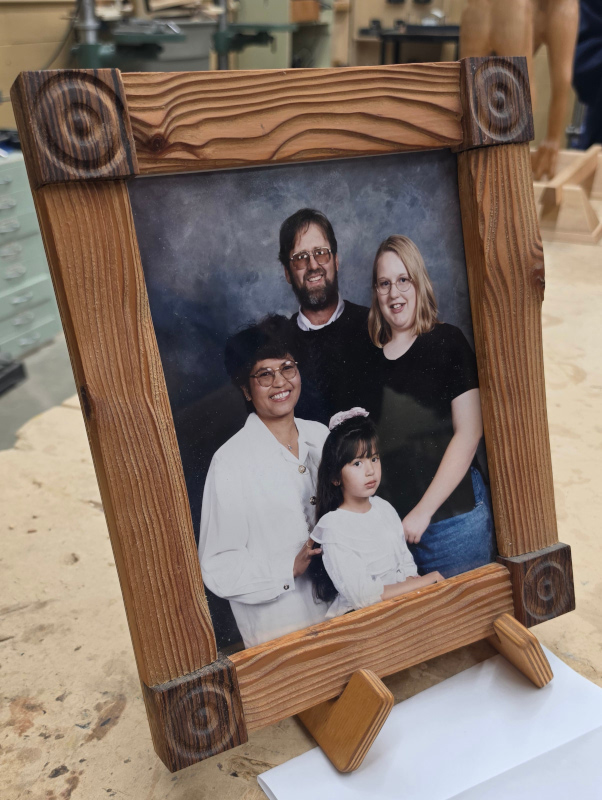
Bernard showed us a picture frame he made.
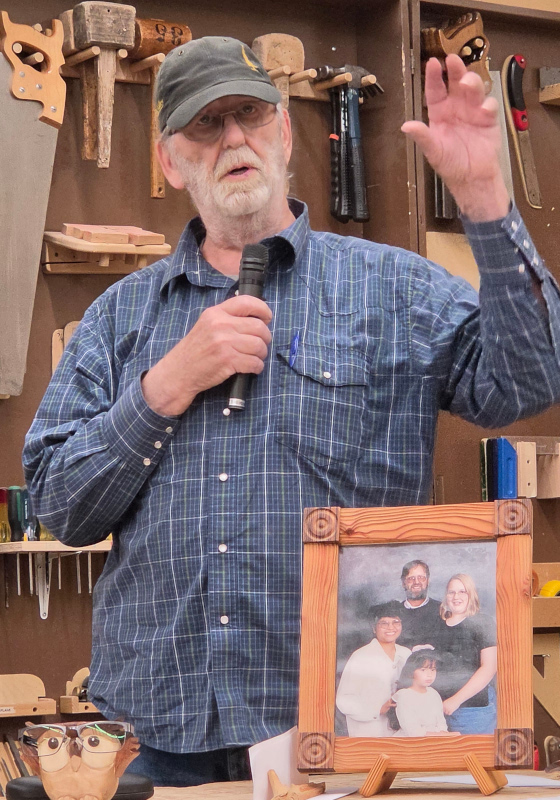
The material is of different thicknesses. Rosets have been placed on the corners, and it all sits on a picture stand.
Cam Harder:
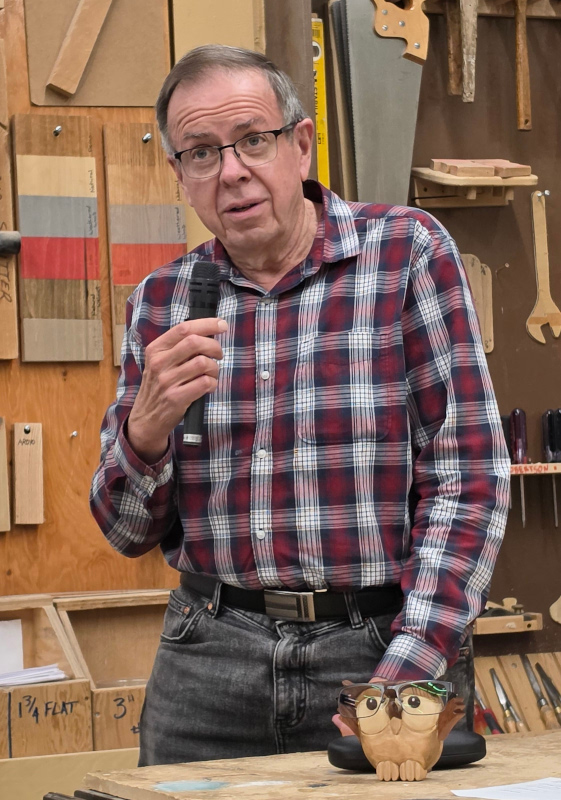
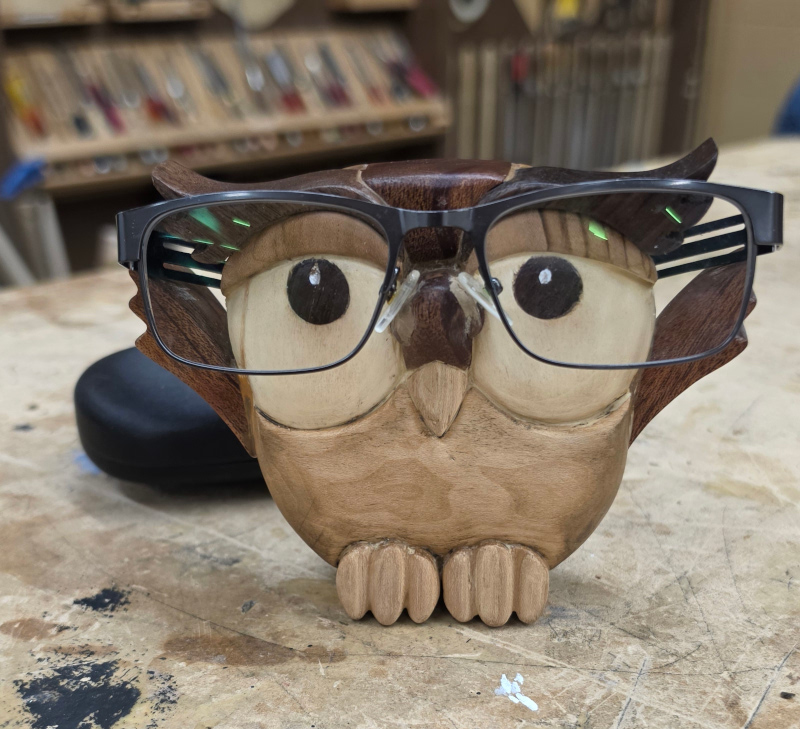
Cam showed us a "3D intarsia piece.
The piece is a "Glasses Owl". It is made from Peruvian walnut, quilted maple, wormy maple African Mahogany. It is finished with Osmo top oil and beeswax.
Gordan Munn
Gord showed us two pieces.
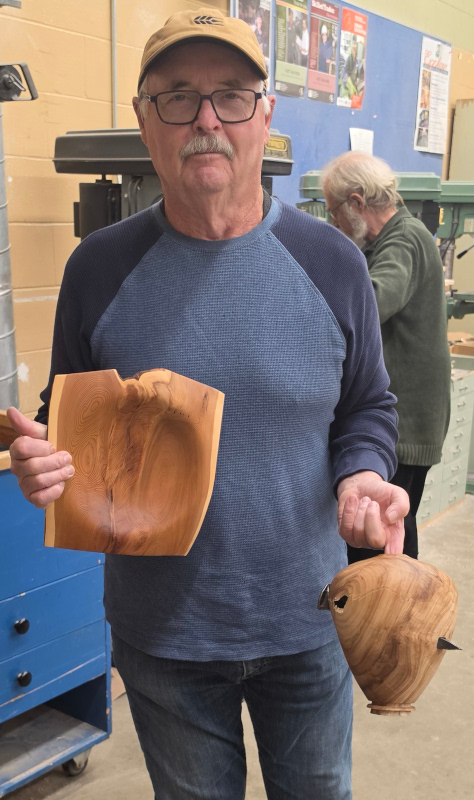
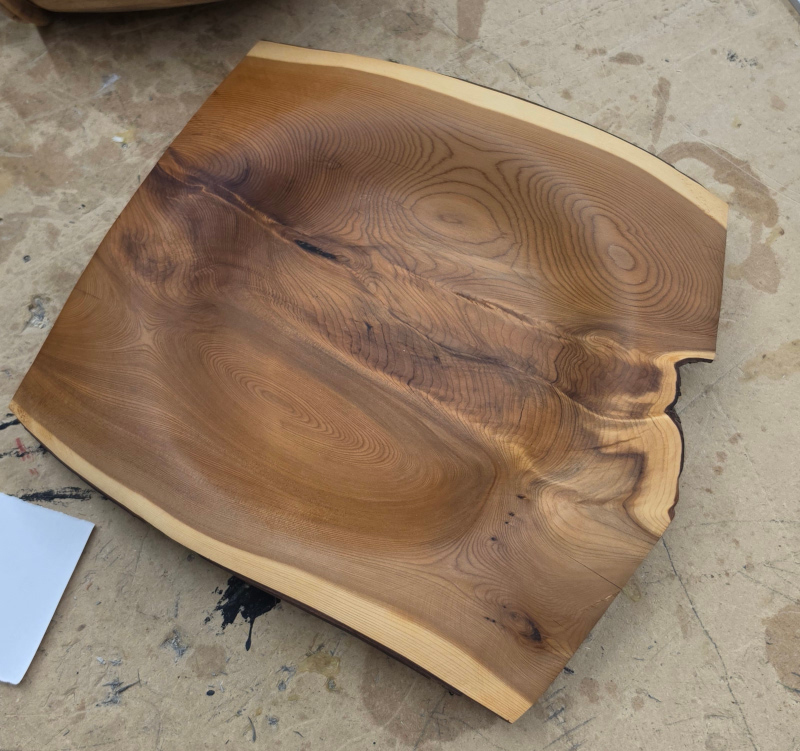
The first is a squarish yew bowl.
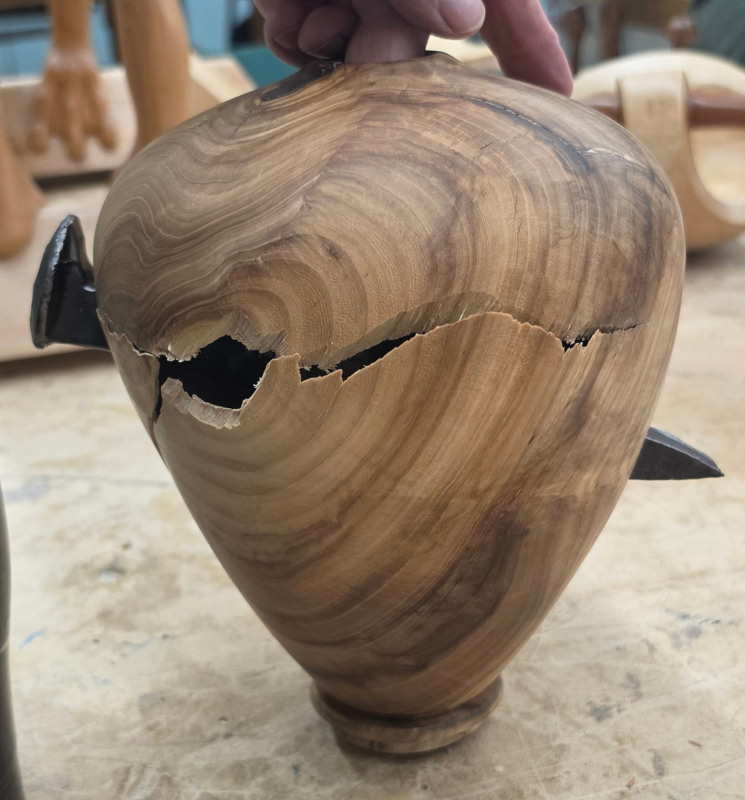
The second is a vessel. It is made from big left maple with a lengthened railway spike through a hole in the vessel.
Jamie Russel:
Jamie showed us a number of pieces.
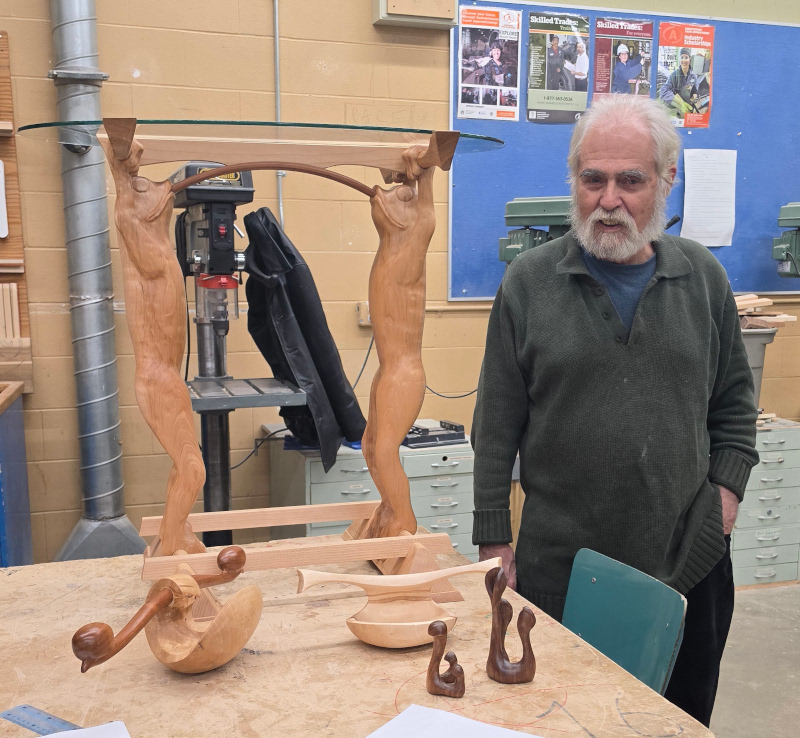
The big piece is "Kiss me I am a Prince" It is made of quilted maple and cherry.
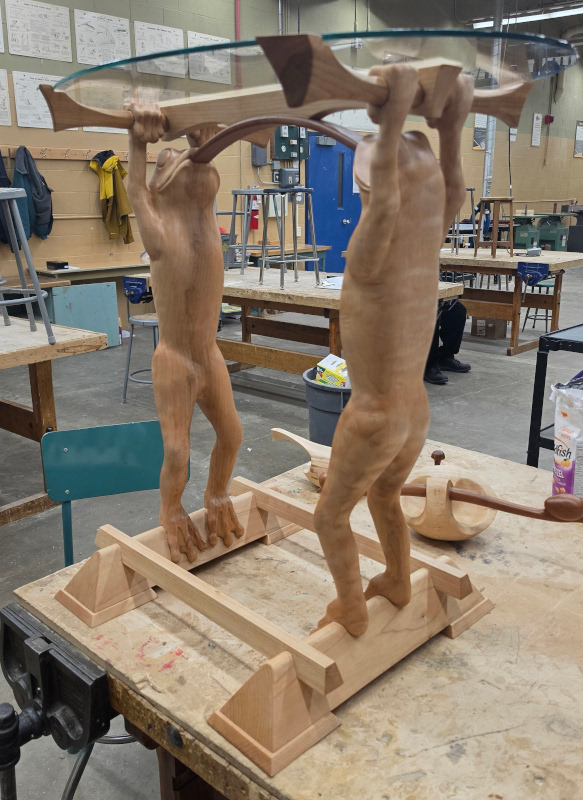
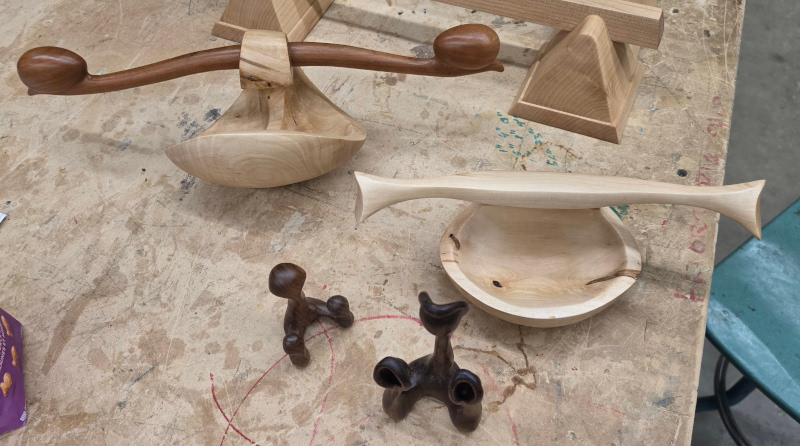
The couple of the pieces are "rolly pollly" of birch and cherry. The other pieces ae of walnut.
Kevin Brehon:
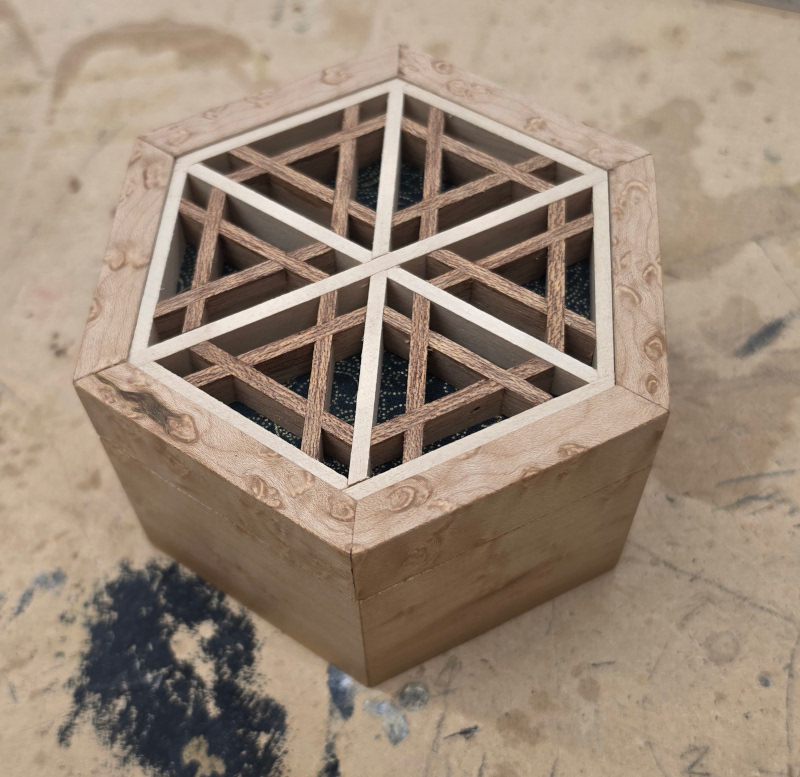
Kevin displayed a keepsake box.
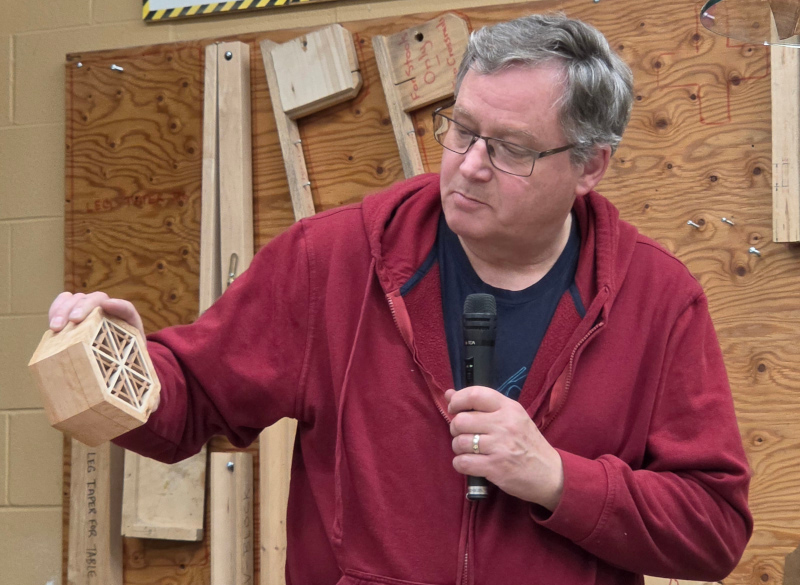
It is made in kumiko style of birdseye maple, basswood,, Philippine mahogany and spruce. It is shellaced and has a cloth lining.
Kelly-Robyn Bellamy.
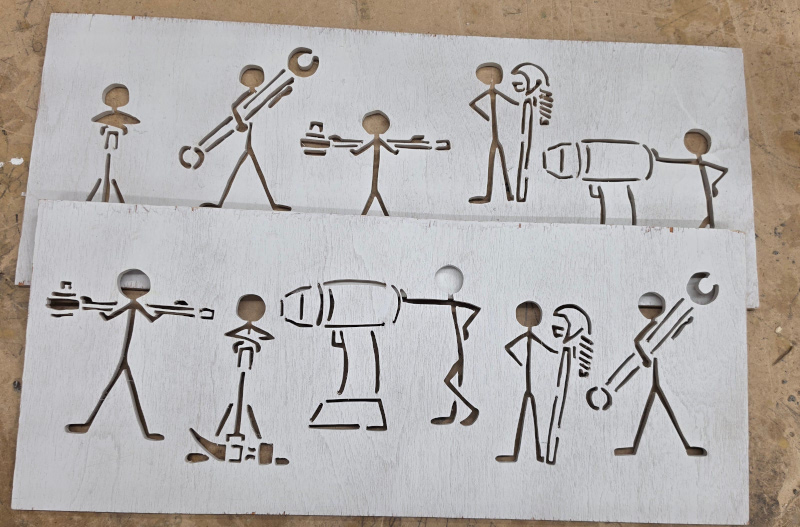
K-R showed us some scroll sawed pieces.
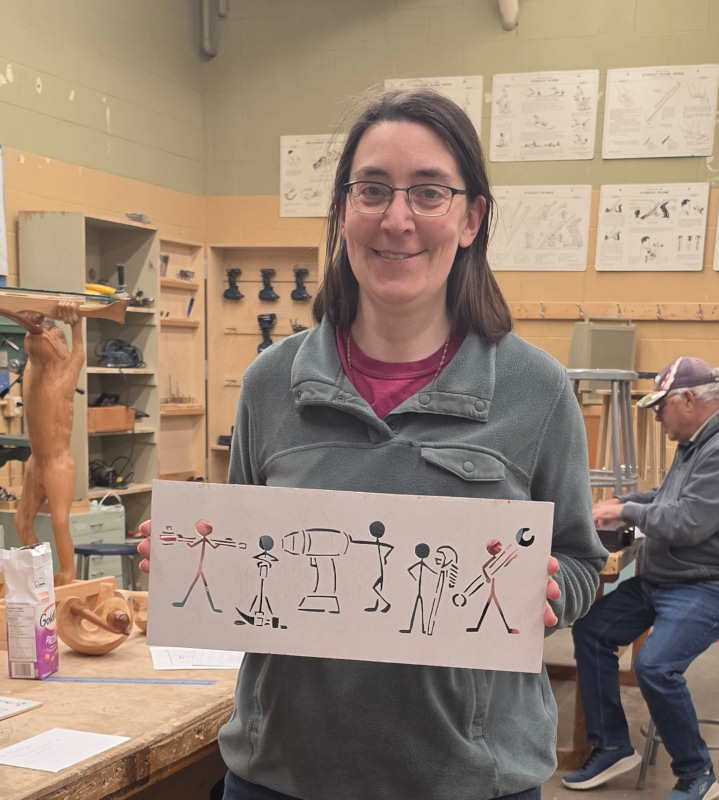
She has called this "Soffit of Stickmen".
Trent Watts:
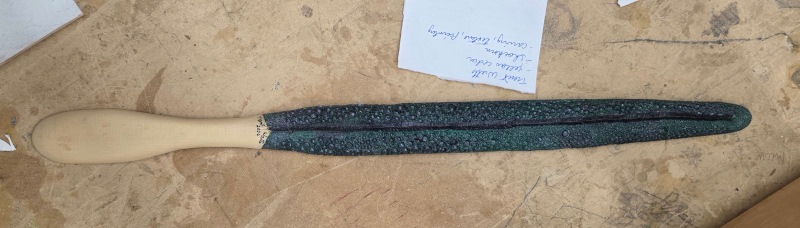
Trent showed us a shoe horn.
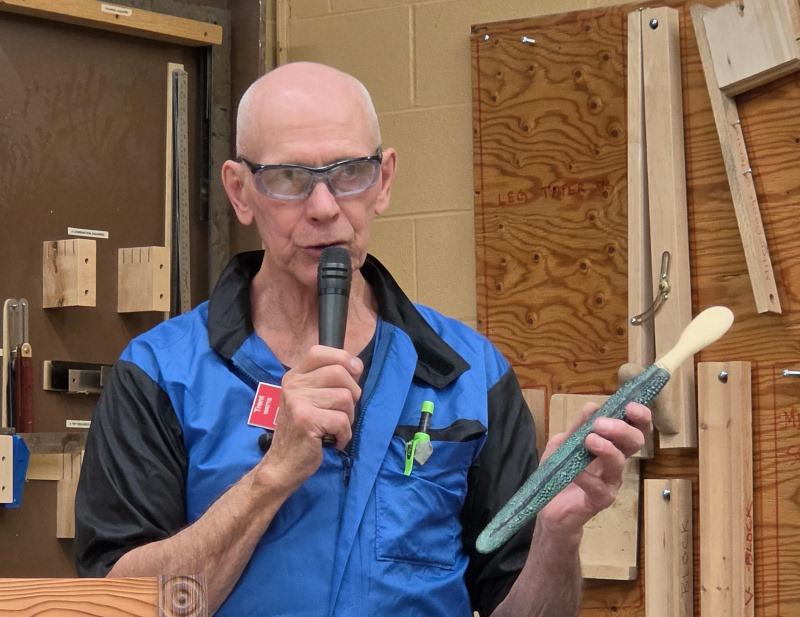
It is made of yellow cedar, features carving and textured painting.
Vic Schapansky:
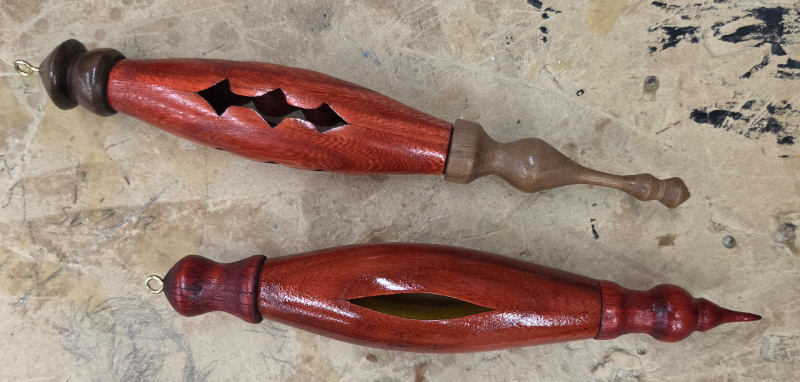
Vic showed us two inside out ornaments.
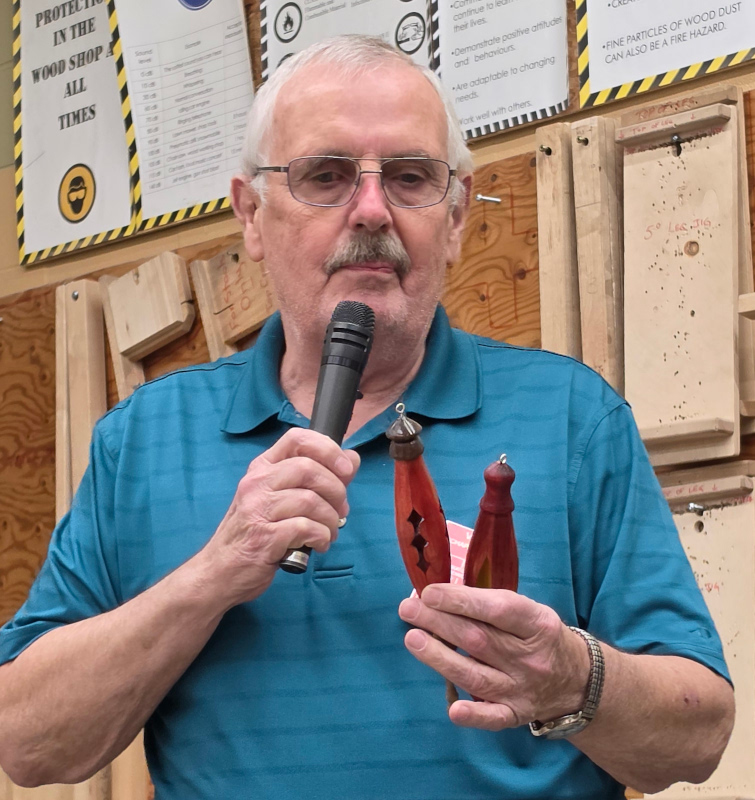
They are made of elm, maple and walnut. He has used dye, tung oil and poly to finish them.
Demo
Trent Watts provide us with a demostration on turning of spin tops.
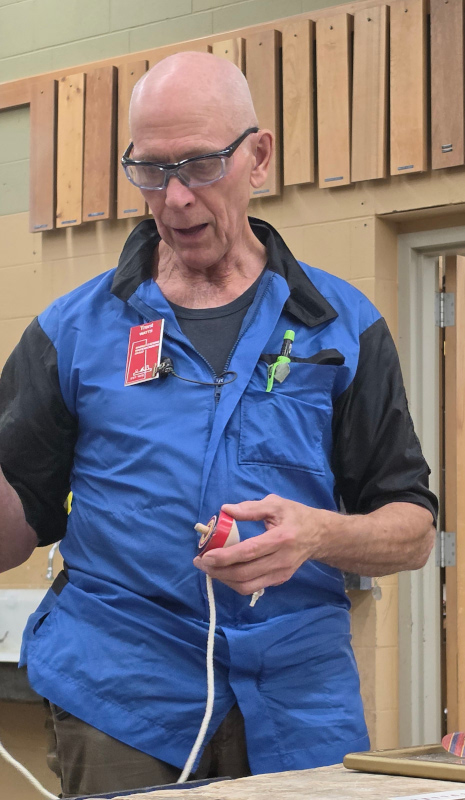
He showed us several commercial examples.
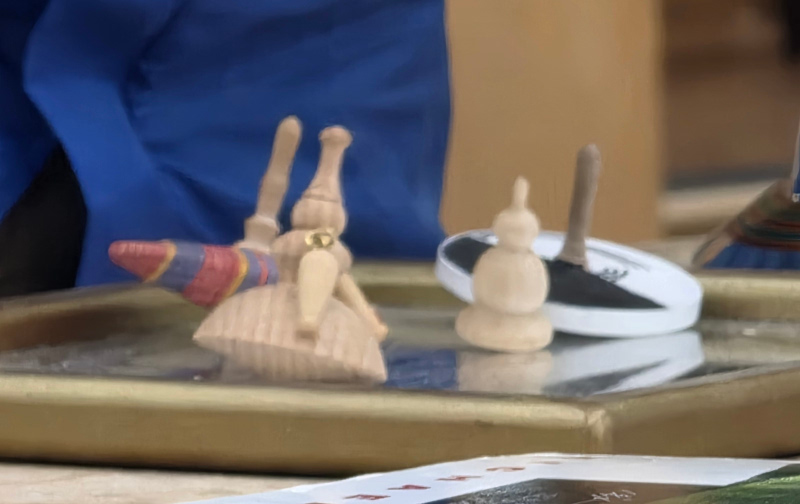
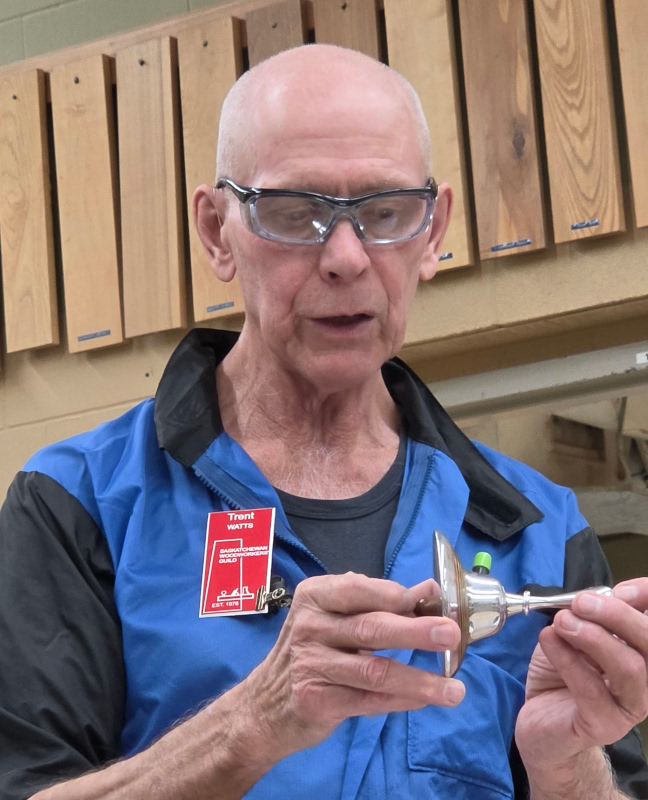
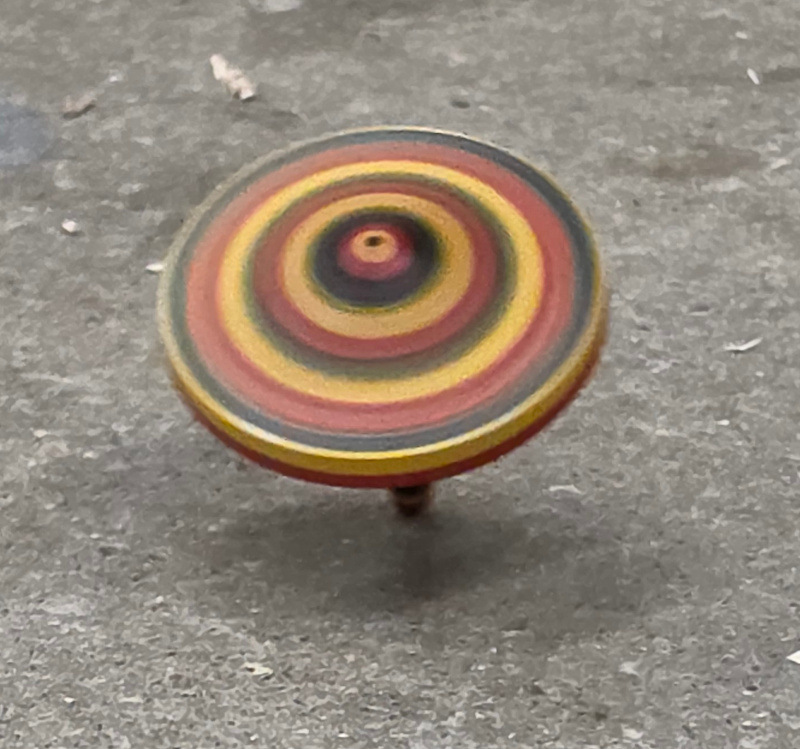
Trent talked about how a spinning top with black and white sections can look coloured. It is unlikely that this effect shows up in photographs.
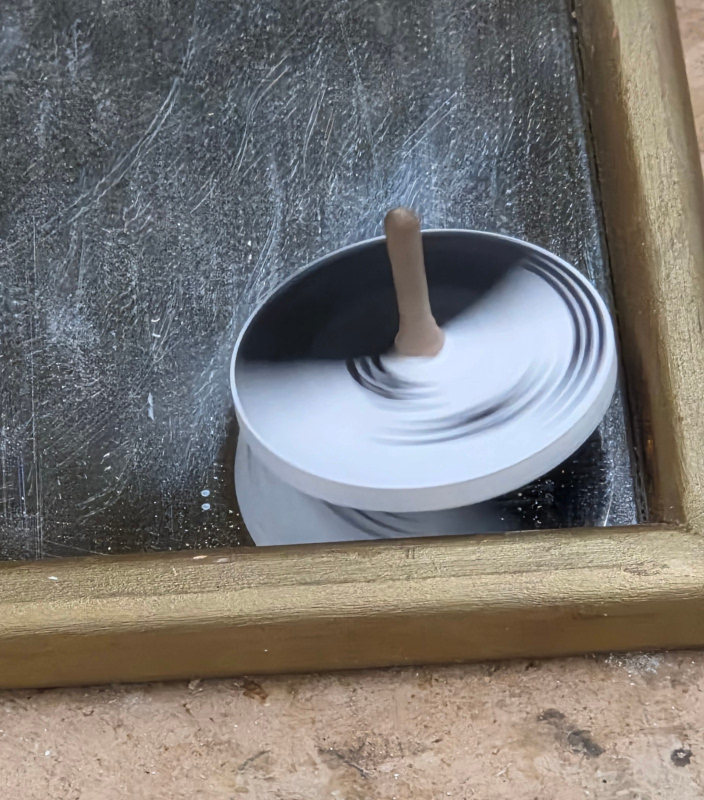
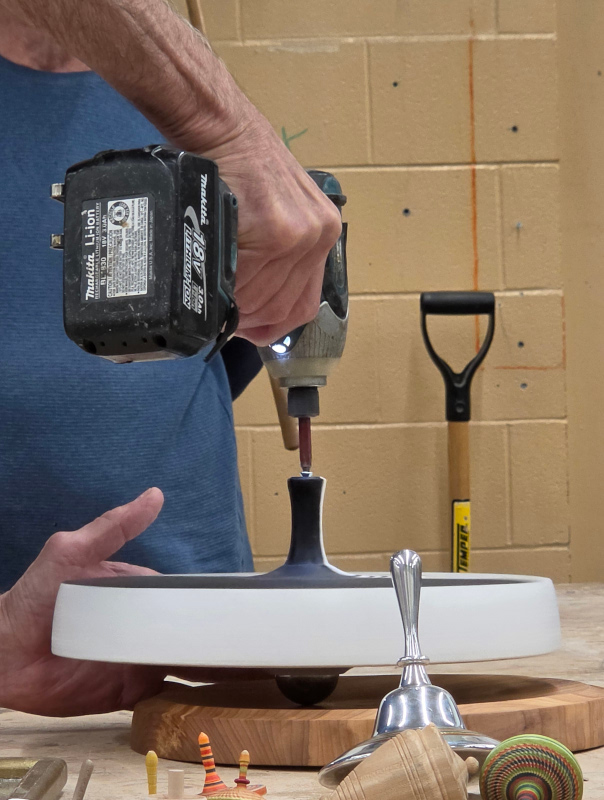
Trent had one big top to demonstrate this effect, big enough that a power tool assist was required.
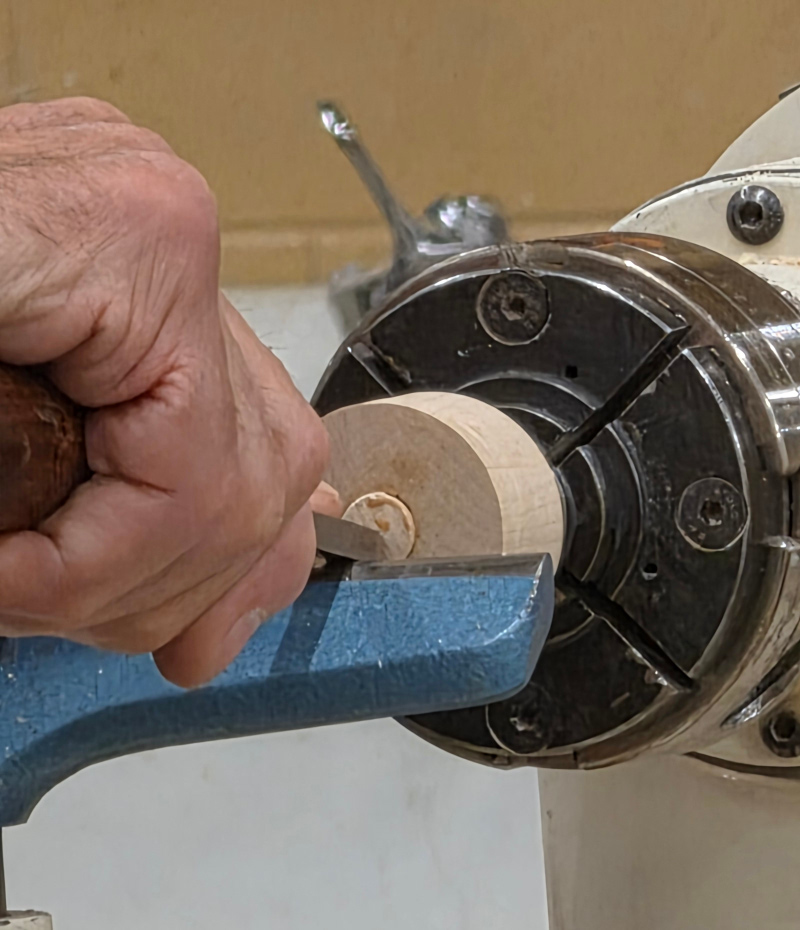
Trent begin his tops with a block of wood with a dowel inserted through it. He chucks the long end of the dowel in the headstock of the lathe and brings the tail stock with a center in it up the the piece. He then begins making the block round.
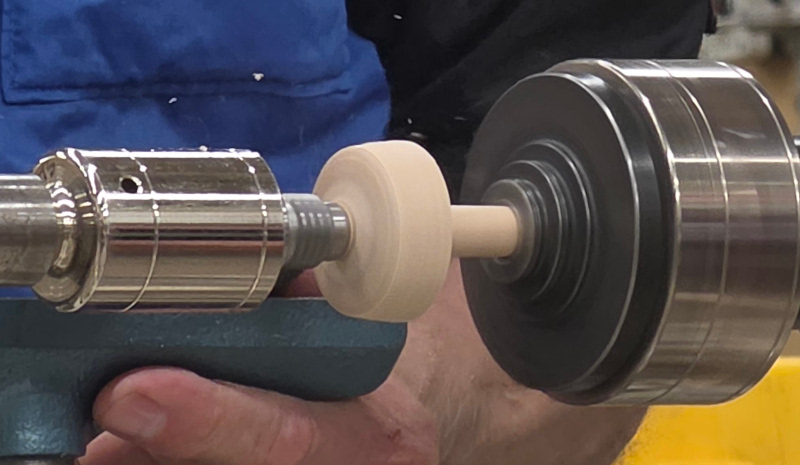
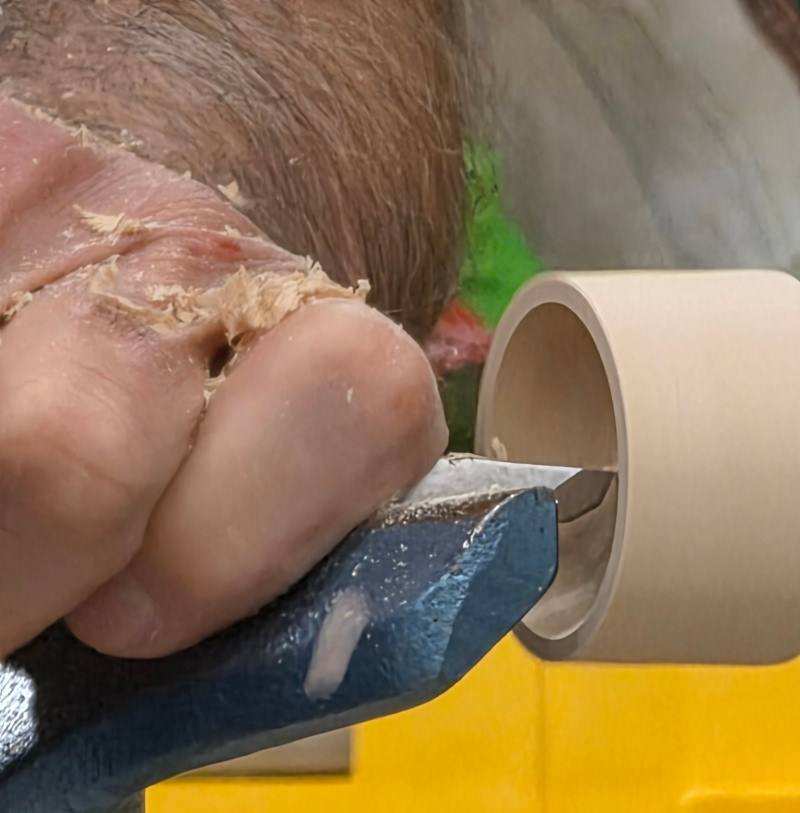
He thins the block part of the top.
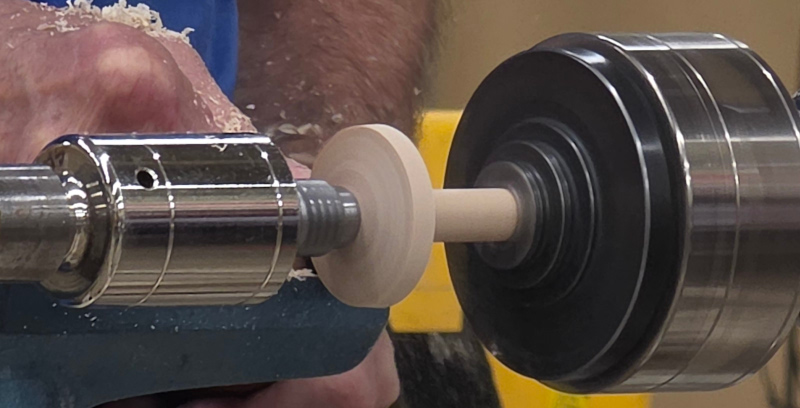
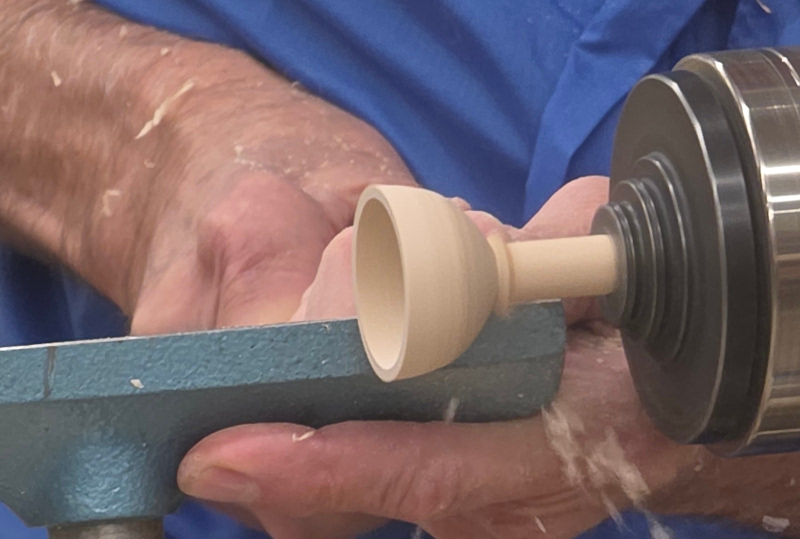
Then he turns down the stem.
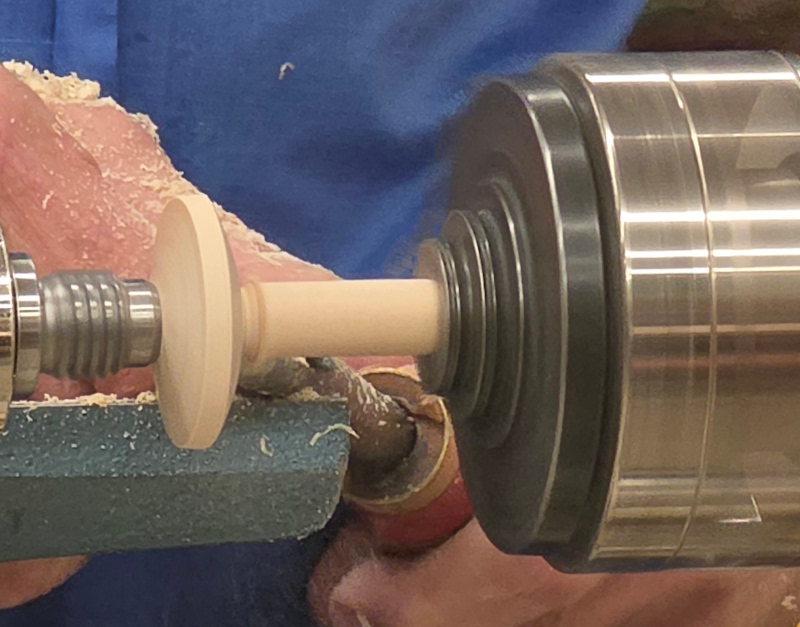
Trent stopped to show us how the point in the tailstock center could be removed so that the tailstock can still stabilize the piece without damaging the point that has been added to the top.
Trent also showed us the chatter tool he uses to make patterns on the faces of the turned disk.
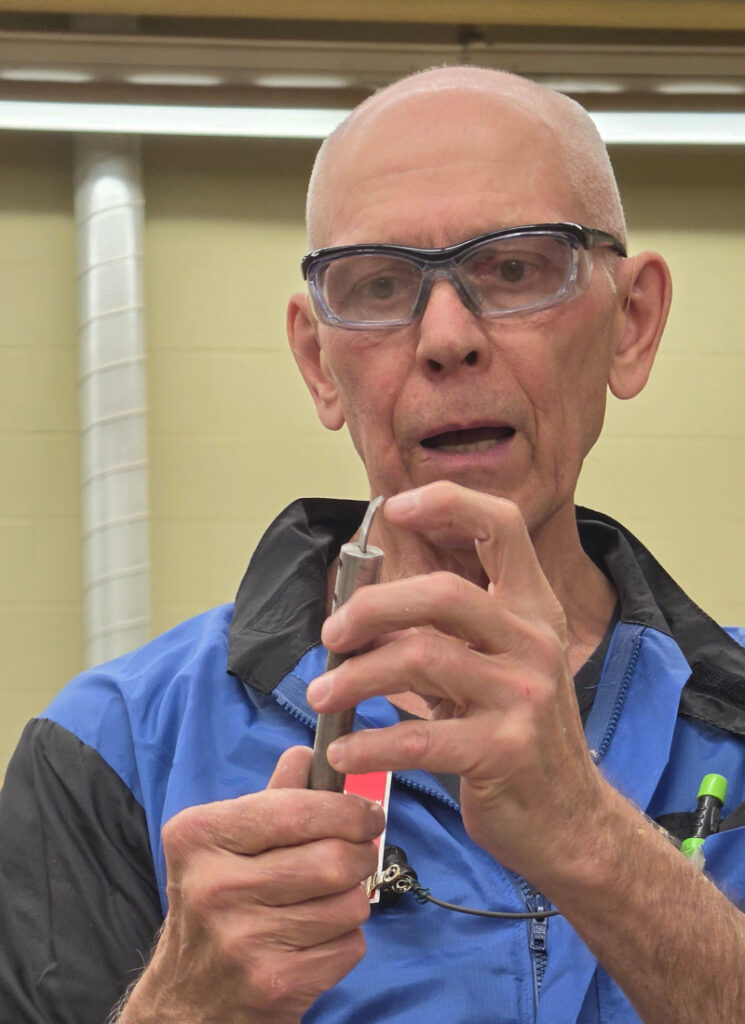
The stem is made smaller yet, the transition from the disk to the stem is worked on.
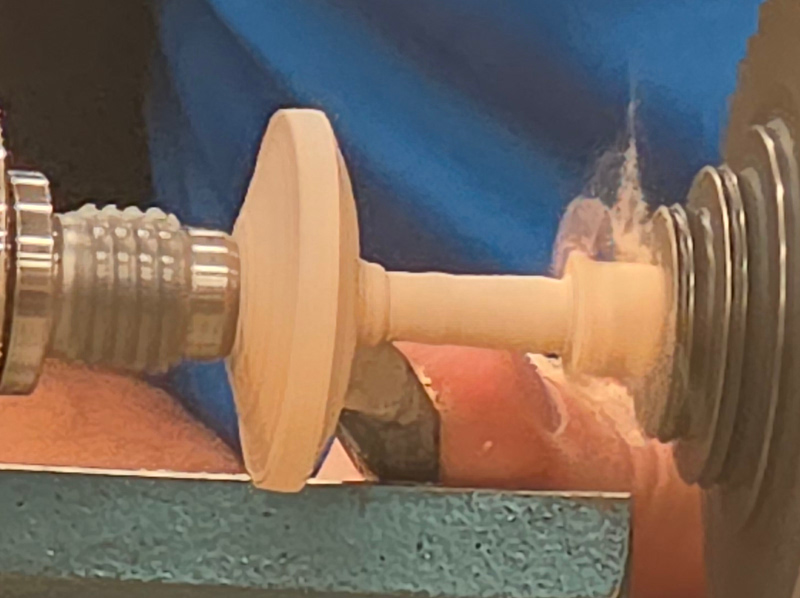
Then he begins to add colour using marker pens.
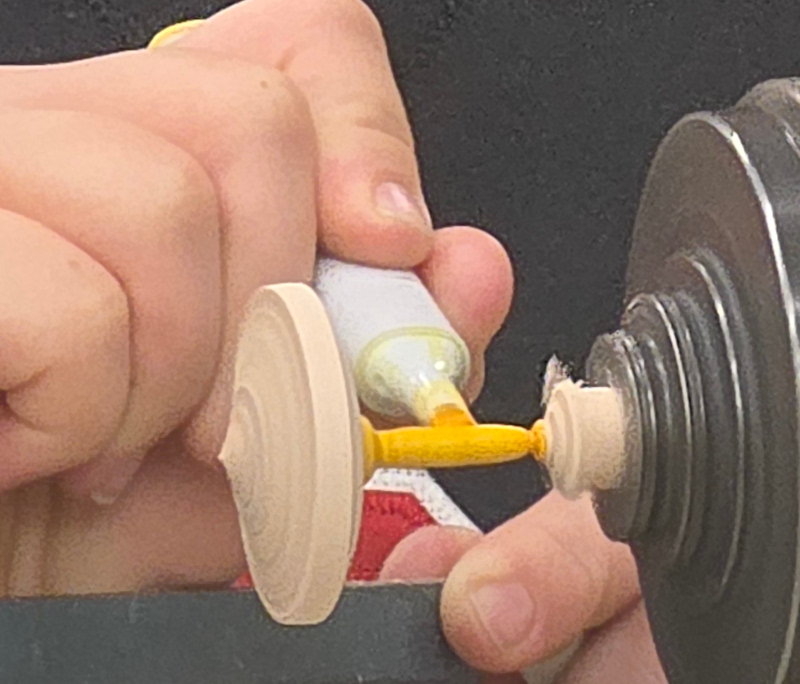
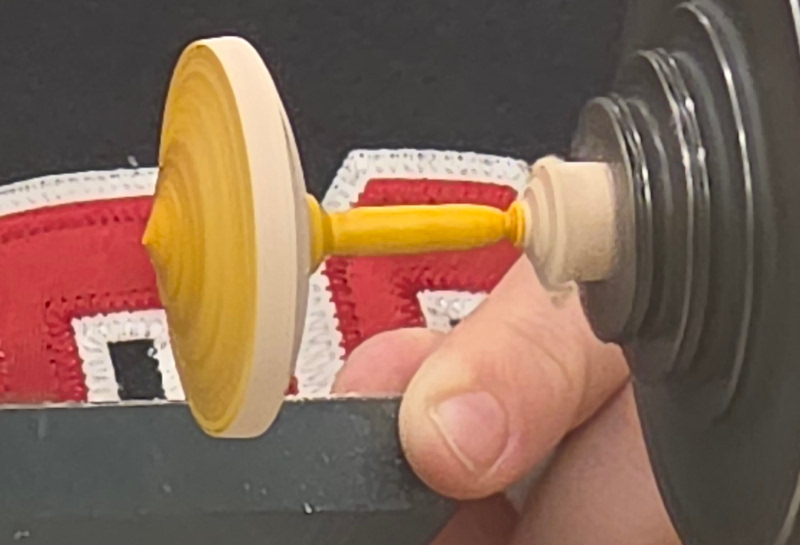
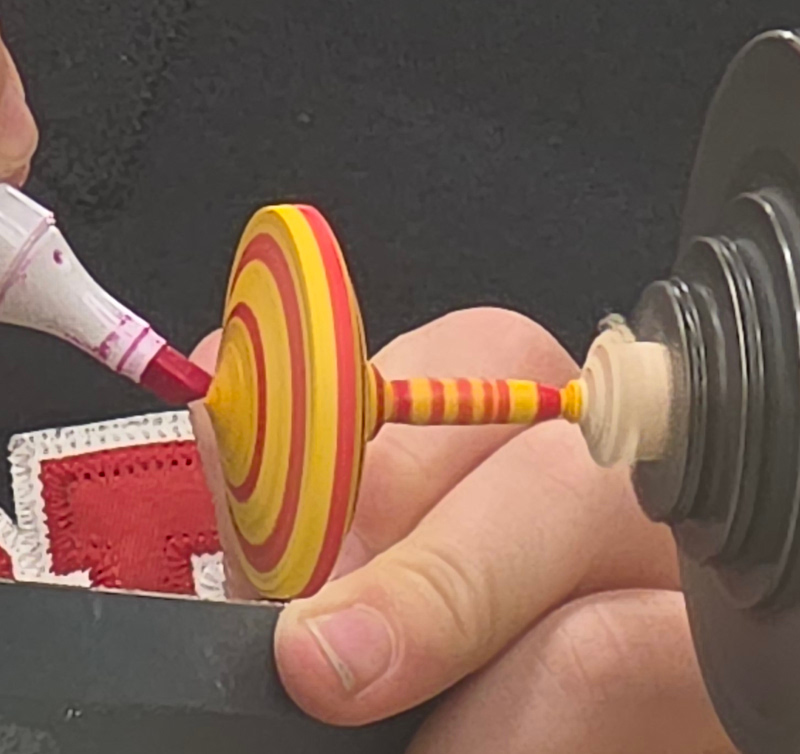
And to finished top spins!
Trent also showed us the start of a finger top.
Thank You Trent